
The Spaces That Quietly Do the Most Work in Your Home
When families think about making their home work better, it’s easy to focus on the rooms where life looks its best: the kitchen, dining room, or living room. But some of the most important design decisions happen in the spaces that quietly support everything around them.
Mudrooms, walk-in pantries, entryways, closets, and the small transition zones between rooms hold the rhythm of a household together. During the school year especially, they are where mornings begin, afternoons unravel, and the whole family resets for the next day.
At the Ruttan project, we created a connected kitchen, dining room, living room, walk-in pantry, and mudroom to support a family with young school-age children—not just for this season of life, but for the years ahead. The goal was a home that feels calm and welcoming while doing the very real work of family life.
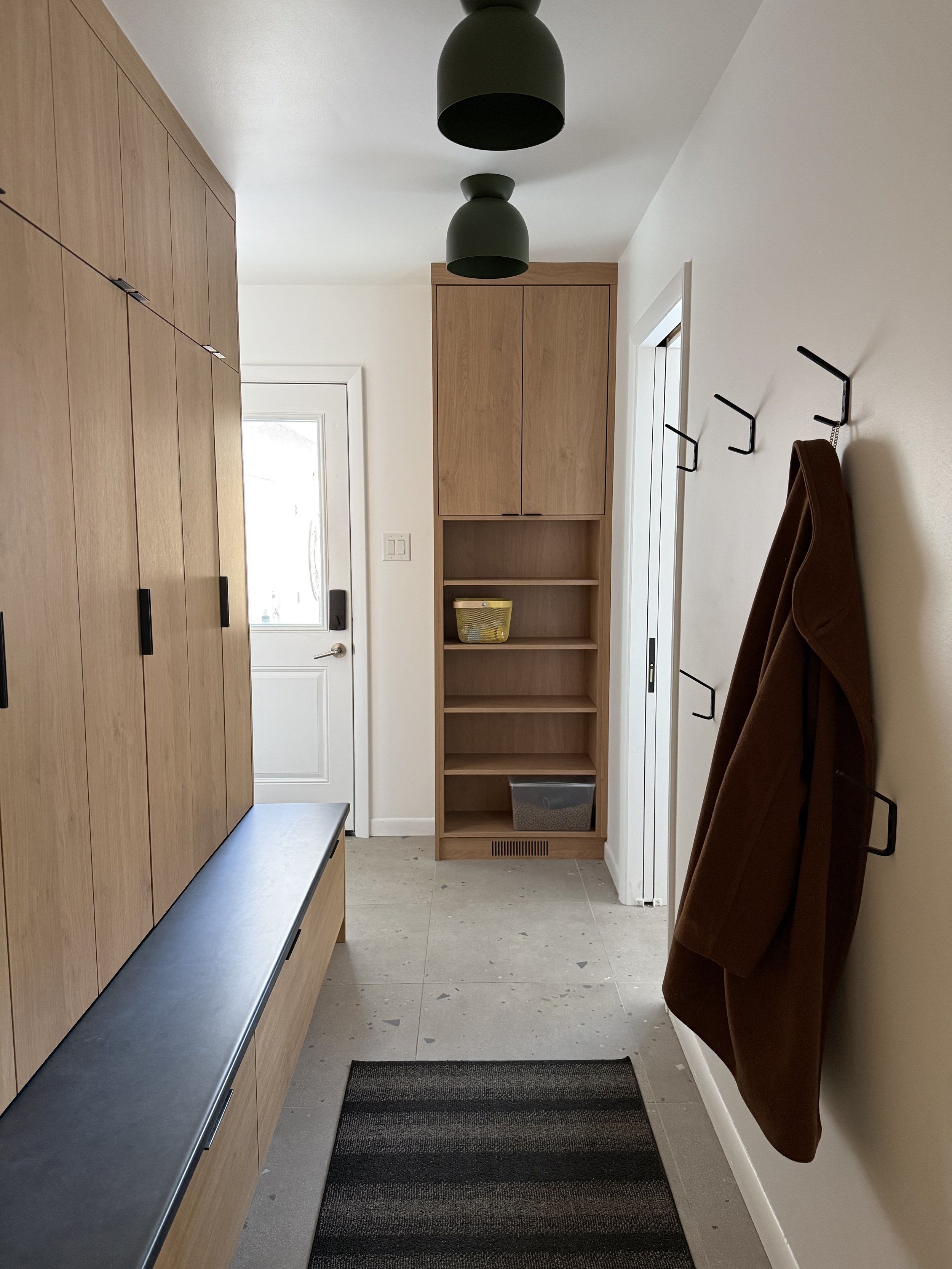
A Place For The Everyday Arrival
In Winnipeg, the transition from outside to inside can be substantial. Snow-covered boots, wet mittens, backpacks, sports gear, layers of outerwear, and the general momentum of a busy day all need somewhere to go.
A well-designed mudroom gives those things a home before they travel through the rest of the house. Thoughtful hooks, durable flooring, accessible storage, and a place to sit down make the arrival routine easier for everyone—including children learning to manage their own things.
This is where drop zones matter. A designated place for backpacks, lunch kits, permission slips, keys, and shoes means fewer items landing on the kitchen counter or being scattered throughout the house. It also means the next morning starts with less searching and fewer reminders.
The best drop zones are not necessarily large. They are simply intentional: easy to reach, easy to use, and tailored to the way a family actually moves through the home.
Storage That Supports Independence
Good storage is not about hiding every trace of life. It’s about making the things you use every day easy to put away and easy to find again.
For a family with young children, that may mean lower hooks and cubbies that make it possible for kids to take responsibility for their own coats and backpacks. As they grow, those same spaces can support larger shoes, more gear, busier schedules, and the inevitable accumulation of school projects and extracurricular equipment.
At Ruttan, the mudroom and walk-in pantry were designed as hardworking support spaces for the kitchen and living areas. Together, they help keep daily necessities close at hand without allowing them to take over the rooms where the family gathers. The kitchen remains a place to cook, connect, and help with homework; the dining room can hold meals and projects; and the living room can feel restorative at the end of the day.
When there is a logical home for what a family carries, uses, and returns to each day, the rest of the house has room to breathe.
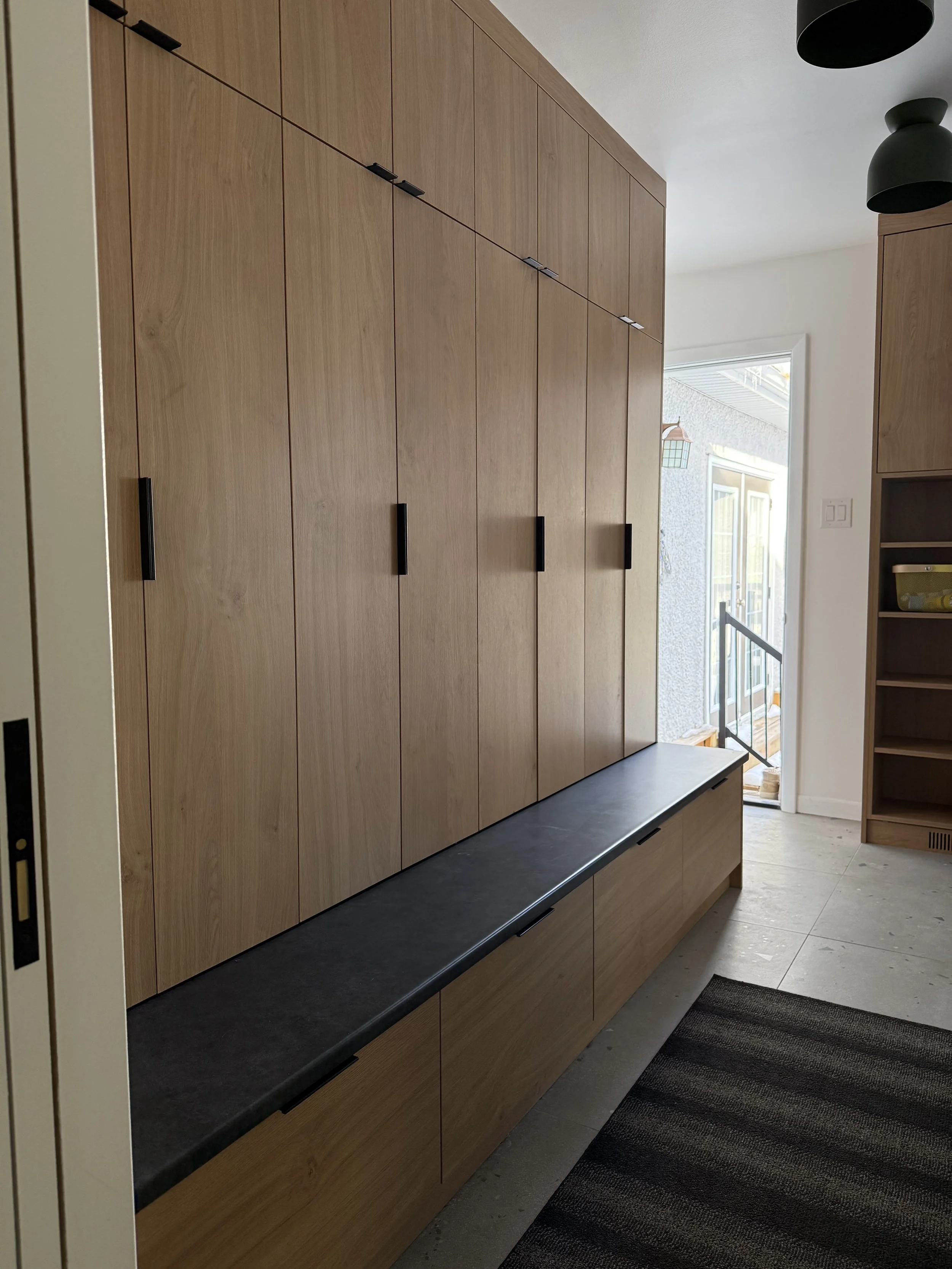
Material Choices For Real Life
A hardworking family home needs materials that can handle being lived in.
In a Winnipeg climate, cleanability and durability are not afterthoughts. Mud, snow, salt, water, and heavy winter layers are part of the routine for much of the year. Choosing flooring that stands up to moisture and frequent cleaning, practical surfaces that do not require precious care, and finishes that age gracefully gives a space the resilience it needs.
Materiality still matters aesthetically. Durable does not need to feel utilitarian. Warm wood tones, tactile finishes, thoughtful lighting, and layers of colour can make a mudroom or storage zone feel considered and connected to the rest of the home. The aim is to create spaces that are beautiful because they work—rather than beautiful only when no one is using them.
Less Visual Clutter, Less Mental Load
The impact of functional design is often felt more than seen.
When shoes are not piled by the door, backpacks have a consistent landing place, pantry staples are easy to locate, and school-day essentials can be found without a search, the home asks less of the people living in it. There are fewer small decisions to make, fewer things to remember, and fewer moments spent looking for what should already be within reach.
That reduction in friction matters. It creates a little more capacity in already-full days.
As families settle into the school-year rhythm, the home can either add to the mental load or quietly help carry it. Design choices around storage, transitions, and material durability may seem modest, but they have an outsized effect on how a home feels from morning to night.
At Ruttan, designing the kitchen, dining room, living room, walk-in pantry, and mudroom as a connected whole created space for both the visible moments of family life and the behind-the-scenes work that makes them possible. It is a home designed to grow with its family, supporting busy school mornings now, and changing routines in the years to come.
The spaces that do the most work may not always be the first ones you notice. But when they are designed well, you feel their impact every day.
A Thoughtful Way Forward
If you are considering a renovation or new build and are looking for a design team that prioritizes clarity, process, and long-term outcomes, full-service interior design may be the right approach.
The best way to know is to start with a conversation that focuses on fit, expectations, and how you want the experience to feel, not just how you want the space to look.